How I supported my husband as he fought to be part of his daughter’s life
Co-parenting , ChildrenBlended families have been around for decades, and while most issues within that dynamic focus on children, being the ‘other parent’ has its own set of challenges. Dineo, 35, shares her story about the ups and downs of co-parenting her stepdaughter with her husband, Thabo, and Thabo’s ex, Busi.
When my husband and I met, my stepdaughter, Naledi, had just turned a year old. Thabo was open with me from outset that he and Busi were still trying to navigate co-parenting and there was a lot of bickering between them.
I didn't have a child at the time, but I helped a lot with raising Naledi and enabling Thabo to play an active part in her life. One day, Naledi referred to me as her second mom when speaking to Busi. This seemed to really affect Busi and my husband was then denied access to his daughter.
I was never there to replace Naledi’s mother. My role was to support my husband regardless of what his ex thought, and to make the situation as painless as possible for his child.
Busi would often make unreasonable demands and at times it felt as though she was just trying to make things difficult so that she could use my husband’s inability to meet those demands as a reason to deny him access to his child.
Seeking legal intervention
At one point we had to approach a family advocate to assist with the situation. To help we had a session whereby we asked for a parental plan and tabled all of the challenges that we had been facing.
Busi never got back to the family advocate about the plan, but instead she went to court to file for maintenance. It was clear to the court that Naledi’s father had never evaded responsibility. So the judge then suggested that we try establish a good relationship between us to make things easier.
Although it was difficult, I knew that it was important for my husband
to be part of Naledi’s life, and so I encouraged him to persevere.
It was difficult. At times we’d go months or even a year or two without contact. Our wider family would try and intervene to make things work, with no luck.
Putting up boundaries
The challenges persisted for years. Although it was difficult, I knew that it was important for my husband to be part of Naledi’s life, and so I encouraged him to persevere.
When Naledi in high school, her mother reached out asking for assistance regarding fees and other expenses. At first my husband was angry, as he had not been consulted about any of the decisions about raising her or which school she would attend, and he felt that was he was being treated as an ATM.
We had to set some clear boundaries about not being made to just take on all of Busi’s financial responsibilities and debts that we had had no part in making decisions about, but this was still a positive turning point and we then started to see some gradual improvement.
Things are more consistent now; Naledi visits us as scheduled and even stays longer if she wants, and communication channels are now open.
My wish is for people to understand that at the centre of all of this is an innocent child who didn't ask to be in this situation. I didn't grow up with both my parents, and even though my biological children are fortunate enough to have their parents together, my heart has always longed to close the gap with my stepdaughter because I didn't want her to feel what I felt growing up.
My husband also comes from a blended family. His parents divorced when he was around six or seven years old, and his father remarried and had kids with his new wife. He experienced the pain of his father not being part of his life and didn’t want that for Naledi.
If we all share mutual love for a child, then we need to put our own egos and emotions aside and focus on the child. We don't have to be at each other's throats. We can get along.
Featured
How to keep your kids busy during the school holidays
Read more about How to keep your kids busy during the school holidaysYou may also like
Who teaches a man how to father?
Here is the good news: fathering is learnable. It's learned the way every craft is learned – by apprenticeship. Watching. Copying. Asking. Failing next to someone who has failed before you and kept going.
Read more about Who teaches a man how to father?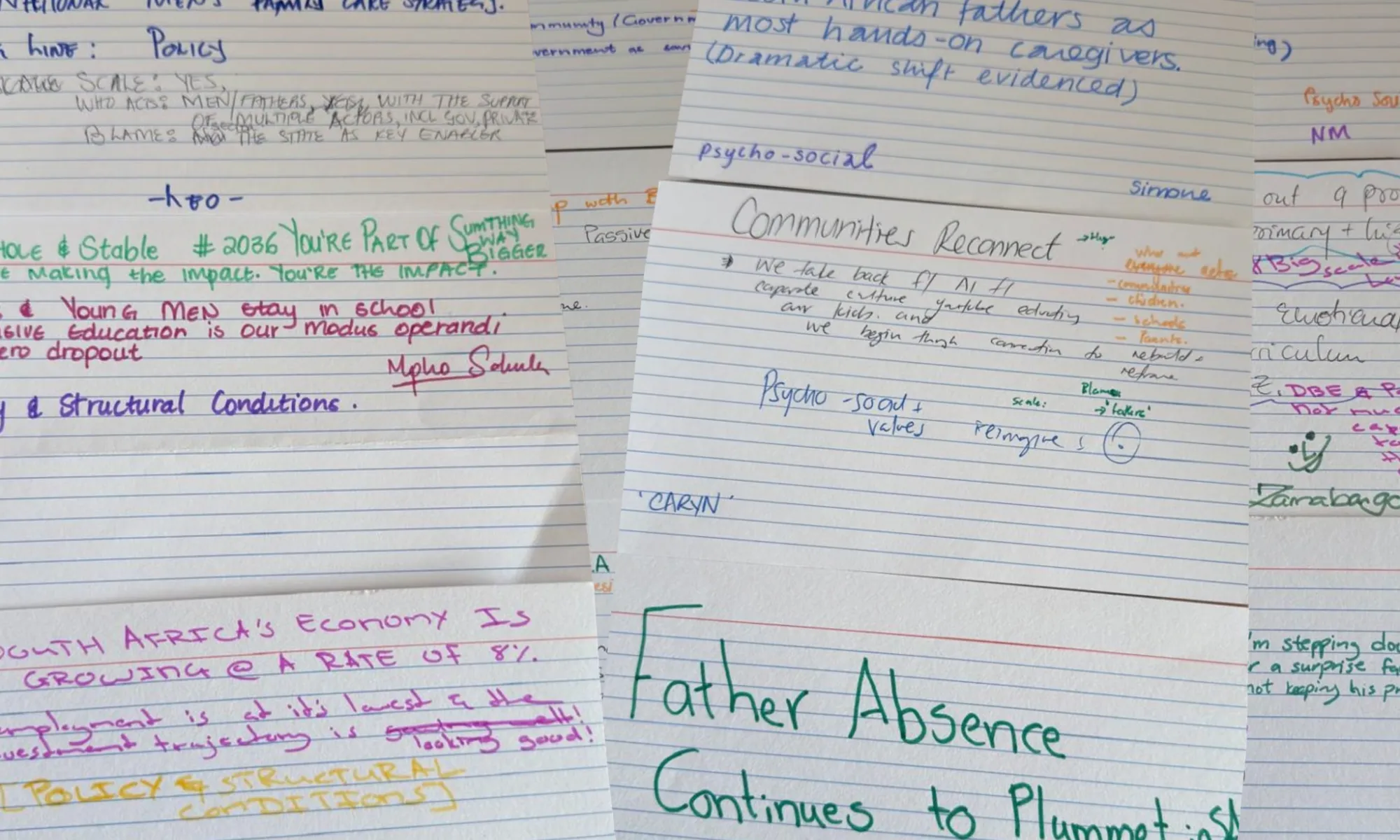
Heartlines hosts author workshop for fatherhood research publication
Head of Research at Heartlines, Livhuwani Maphorogo, convened a workshop for authors contributing to an upcoming Heartlines publication on interdisciplinary perspectives on fatherhood, masculinity and youth in South Africa.
Read more about Heartlines hosts author workshop for fatherhood research publication
My lesson in true leadership
When one of his social fathers invited Lehlohonolo to a leadership moment, things didn't turn out quite as he'd expected. But he learnt a life-changing lesson that he still relies on today.
Read more about My lesson in true leadership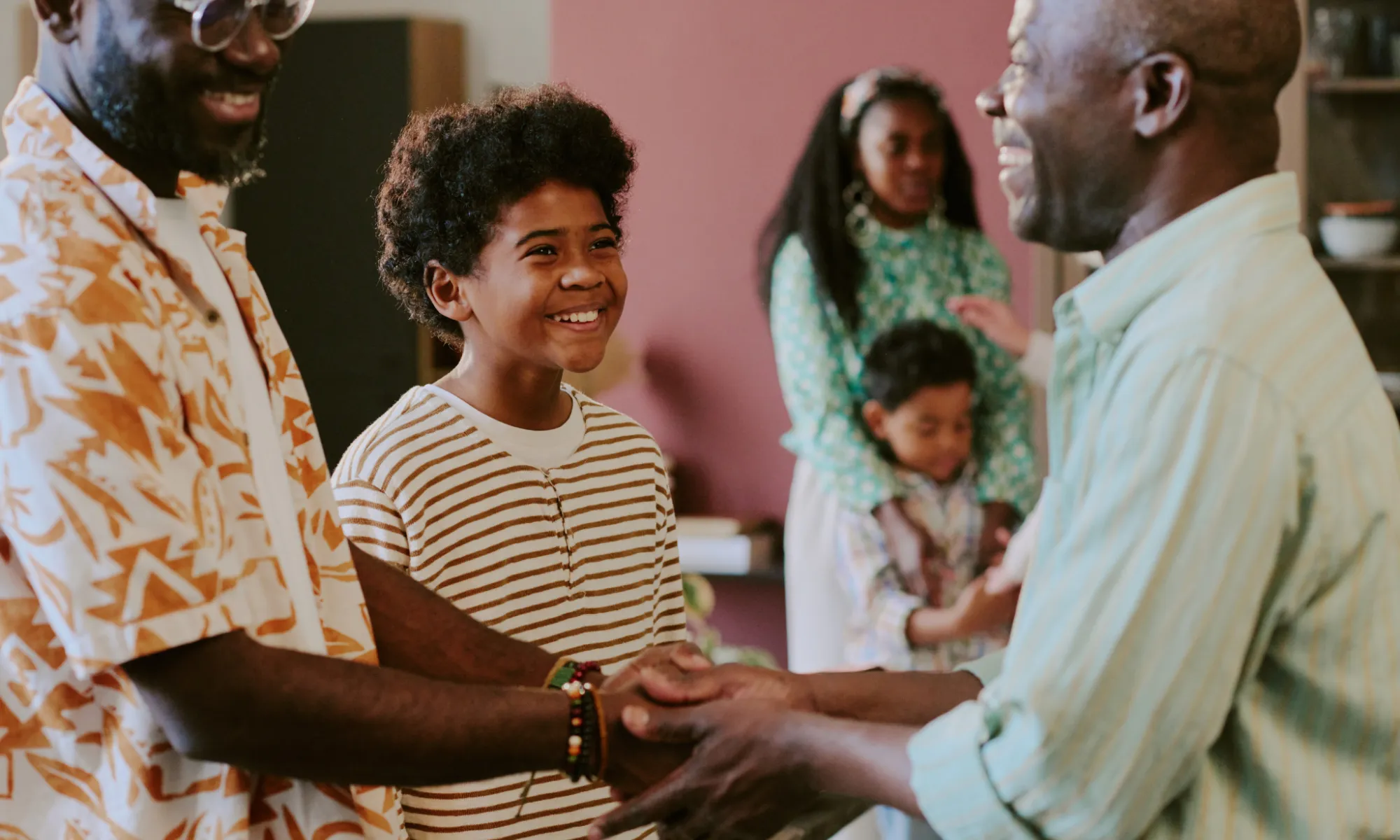
How biological fathers and stepfathers can successfully co-parent
Where there are “bonus parents” in a family, it's important for the dads, stepdads and other male caregivers to find ways to work together to make their co-parenting relationship beneficial for the child.
Read more about How biological fathers and stepfathers can successfully co-parent
My father's love language
As we think about our father stories, it can help to remember that fathers are people, just like us. And sometimes, connection grows from understanding how they give and receive love.
Read more about My father's love language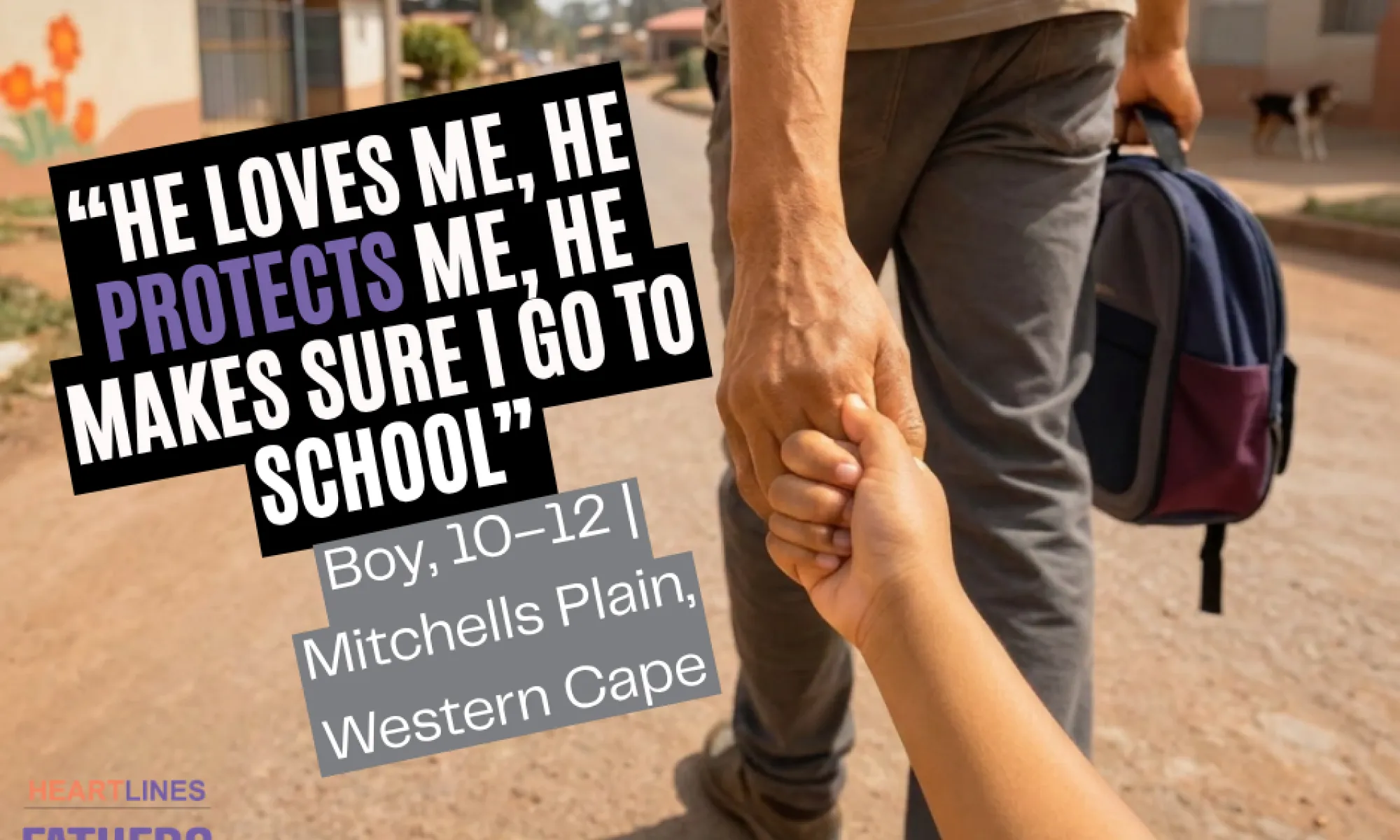
See the winning competition entries
See some of the winning entries from our Youth Month Competition. The competition was an opportunity for children to share their views about fatherhood. There were some powerful, inspiring and moving submissions.
Read more about See the winning competition entries