The day men returned to school, for their children
Being a father , Children , CommunityThere’s something poetic about watching a group of grown men file into a primary school classroom, the same space meant for tiny chairs, number charts and half-sharpened pencils. Yet on this warm November morning in Orange Farm, the classroom at Zonkizizwe Primary School was hosting a different kind of curriculum: fatherhood. No chalkboards, no formal lesson plan, just men arriving with their stories, their children, and the quiet hope of becoming better fathers than the ones they had, or didn’t have.

The room was filled with a soft hum at first, greetings, handshakes, jokes about how small the chairs were, but beneath that was something deeper. These men weren’t just attending a workshop. They were showing up for their children. And sometimes, that’s half the battle won.
Heartlines facilitator, Gosiame Masike, stood at the front guiding conversations with warmth, energy and easy laugher. “Bo baba,” he began, scanning the room, “what do you do to give your child an identity?”
The question hung in the air. Identity, a heavy word when spoken among men who are still piecing together their own.
One father leaned forward, elbows on his knees.
“Identity starts with knowing yourself first,” he said. “Even though I don’t know my father’s background, I must accept who I am right now. Then I can pass that down to my children.”
He paused. “Growing up bothered me… being unwanted by my own father.”
The room went still.
Another father added, “My daughter uses her mother’s surname, but I teach her my heritage. My identity. So she knows who we are.”
Gosiame nodded. “Men, let’s make sure the identity of the child is secure. Let’s not leave them in confusion.”
It wasn’t a lecture. It was a reminder, children need roots, even when fathers are still learning to grow their own.
After the groundwork was set among the fathers. Their children began filing in, sparking beams of delight across the fathers' faces in the room. The conversation now included the kids, and their perspectives on what an active and loving fathers is.
Later, the fathers gathered with their children to watch the Fathers Matter film In Time. Some kids climbed onto their father’s laps, arms wrapped around necks, others pulled their chairs closer, eyes fixed on the screen. Every now and then, a father would glance down at the child resting on him, a quiet, wordless affirmation that presence is a language on its own.
Reflections and important conversations
When the film ended, Gosiame faciliatated a group discussion involving the parents and children.
“Bokamoso always had her father’s voice in her head,” a child said. “That pushed her to keep going.” Heads nodded around the room, the understanding that a father’s voice, whether spoken or remembered, can anchor a child through storms.
“What will you do differently after watching this film?” Gosiame asked.
A little girl raised her hand shyly. “I won’t be too demanding,” she said. The room chuckled softly, but the sincerity moved everyone.
“You don’t have to have it all,” Gosiame reminded the fathers, “to have a voice in your child’s life.”
Another daughter said simply, “I learned to appreciate.”
Gosiame nodded again. “There’s nothing more inspiring for a man than to be appreciated.”
One girl said, “My father’s words will guide me to succeed.”
“Exactly,” Gosiame replied. “When challenges come, your father’s words will be your compass.”
Then a soft voice in the back: “I learned to make my dad proud.”
The room erupted in applause.
“What will make your father proud?” Gosiame asked. “Start by working hard to pass at school.”
A young boy added, “I learned that support from a father is important.”
“Sometimes we don’t support our kids enough,” said Gosiame. “We need to love them even when they fail. Love must be unconditional.”
“Build trust by explaining to them what their names mean. Identity begins with that. And tell your stories, where you were born, how you grew up. Ask, listen, tell. That is how connection grows.”
One father shared that he has already started documenting his family history, culture, stories, lineage and keeping it safe for his children. “If anything happens to me,” he said quietly, “my children will still know who they are.”
And that, perhaps, was the heart of the workshop. Not perfection. Not heroic fatherhood, just ordinary men, in a small classroom, choosing to break cycles instead of repeating them.
They came as fathers, but they left as storytellers, guardians of identity and anchors of presence.
And somewhere among the tiny chairs and chalkboards, a new kind of lesson took root – one that will outlive all of them.

Lehlohonolo Ramosolo
Lehlohonolo is a creative and results-driven social media and content specialist who is passionate about social and community-building communication.
Featured
My lesson in true leadership
Read more about My lesson in true leadershipYou may also like
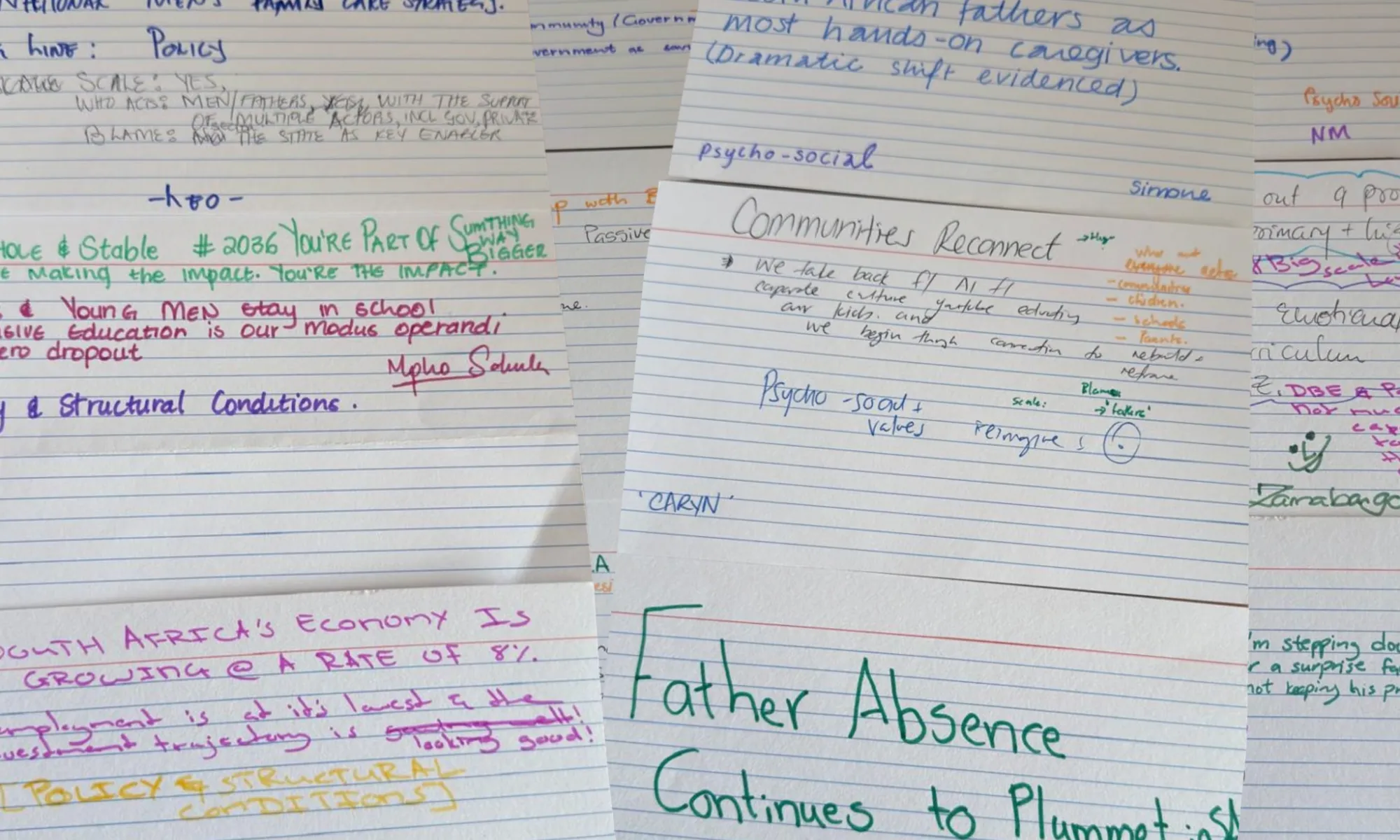
Heartlines hosts author workshop for fatherhood research publication
Head of Research at Heartlines, Livhuwani Maphorogo, convened a workshop for authors contributing to an upcoming Heartlines publication on interdisciplinary perspectives on fatherhood, masculinity and youth in South Africa.
Read more about Heartlines hosts author workshop for fatherhood research publication
Fathering my father
Themba has carried the strange inheritance of needing to father his father, and has come to believe that it means three different things. Read his powerful reflections.
Read more about Fathering my father
My lesson in true leadership
When one of his social fathers invited Lehlohonolo to a leadership moment, things didn't turn out quite as he'd expected. But he learnt a life-changing lesson that he still relies on today.
Read more about My lesson in true leadership
What going to the mountains can teach our boys about becoming men
Initiation Series: Part 2
This second article in our initiation series looks at what boys can learn about becoming men who lead well from their time at initiation school.
Read more about What going to the mountains can teach our boys about becoming men
Where are the safe spaces that teach men how to father?
Fatherhood can sometimes feel quite lonely, because no one tells you how to father. When a woman gives birth her village automatically takes arm and offers support, advice, meal plans and encouragement. But as a new dad you can find yourself navigating this journey largely on your own.
Read more about Where are the safe spaces that teach men how to father?
When your son goes to the mountain: Why single mothers need support too
Initiation Series: Part 1
This first article in our initiation series looks at the experiences of single mothers as their sons take an important step in their journey to adulthood.
Read more about When your son goes to the mountain: Why single mothers need support too