Fathering my father
Community , Family , Fathers Matter , Grief"What kind of father do you expect me to be, when I had to be a father to my father?"
The question came down a phone line on a Wednesday night, into a METRO FM studio where the lines were hot and we were deep into fatherhood – positive, negative, absent. A young man had got through. He told us he had only now begun to understand what his father survived as a child, and what it cost that man to raise anyone at all. He told us that when he once pressed his father about the way he had treated him – the kind of treatment that makes a boy swear, “I will never do this to my son” – the old man did not apologise, and did not explain. He answered with that question.
It has stuck to the caller, he told us, every day since. It has stuck to me too. On air I heard myself say, "Yoh – that's powerful," which is what a man says when a sentence lands somewhere he cannot afford to show on live radio. The mics went cold at nine. The question got into the car with me and would not get out.
Because I know that reversal in my own bones. I did not merely have an absent father; I had a father who needed fathering – and in the end, he got it from us.
He gave up on us
When my dad died, I wrote in Village Boy that in many ways he had died whilst he lived. He gave up on us long before his body gave up on him. The father fire in him had grown cold years before his body did. And yet, when the call came – Ndodana, ubaba wakho usesishiyile (Son, your father has left us) – look what happened. His children gathered. We painted his house in the days before the funeral and got the place ready. My brother pastored the umlindelo, the night vigil on the eve of his burial. My sisters and brothers and I, children he had scattered across the province like seed he never returned to water, put money together and buried him. Twelve of us stood at that coffin – brothers and sisters joined by blood yet complete strangers, some of us avoiding one another's eyes because we were meeting for the first time, at our own father's funeral. I was asked to speak on behalf of the children. I clothed my speech in humour, because the truth underneath it had no clothes.
Understand what happened there. The man who did not provide for us was, at the last, provided for by us. The man who once ran across a churchyard not to embrace my half-sister but to hush her – "Don't mention to anyone that I'm your father!" – was claimed, in death, by the very children he would not claim in life. We fed the mourners he left behind. We fathered our father all the way to his grave.
I have carried that strange inheritance for years, and I have come to believe that "fathering my father" means three different things. I have had to reckon with all three.
The man who did not provide for us was, at the last, provided for by us... We fathered our father all the way to his grave.
The first is the literal one. Across South Africa, sons and daughters are paying their fathers' debts, carrying men who never carried them. If that is you, I will not romanticise it. It is a weight no child was designed to carry.
The second is harder. To father my father is to look at him the way a father looks at a boy: to see him whole, upstream of his failures. On the radio that night I said that when society sees a broken man, we gather at the crash – but we rarely walk up the hill to ask what happened upstream. My father was somebody's unfathered boy before he was my absent father. Nobody taught him; nobody ran alongside him; and the wreckage landed on his children. Seeing this is not a pardon. Nothing about understanding a man's wound obliges you to call it an excuse. But it is a map – and a son who can read the map of his father's ruin is far less likely to repeat the route.
The third meaning is the one that undid me. When my dad died, I wrote that my fatherlessness was suddenly unfathered. While he lived, there was always a flicker of hope that the fire might catch again – that one day he would sit me down and hand me the missing pieces of myself. His death burned that library down. The clues to who I am went into the ground with him. What do you do when the man who was meant to father you needed fathering, and then took even the hope of it to the grave?
'I let myself be fathered'
Here is what I did, slowly, with prayer and with help. I let myself be fathered. Scripture calls God "a father to the fatherless" who "sets the lonely in families" – and I discovered that this is not a greeting-card verse; it is a survival document. The Father who stays began, patiently, to raise the man my father left half-built. And then I did the only thing that makes the whole bitter inheritance mean something: I turned around and fathered forward.
The caller's question still stands, and it deserves a straight answer. What kind of father can a man be, when he had to be a father to his father? He can be the kind who ends the queue. Somewhere, a line of unfathered boys stretches back through our families like a debt handed down – each generation billed for the last one's absence. Someone has to be the last son who pays it. Someone has to absorb the cost without invoicing his children.
My father never stayed. I buried him anyway. And then I went home to my four children – and stayed.

Themba Dlamini
Themba Dlamini is a husband, father of four, pastor and chartered accountant who loves South Africa – warts and all. He is the author of Village Boy: A Memoir of Fatherlessness, and writes to wrestle with hard truths, stir hope and help build a country in which his children can thrive.
Featured

A different kind of New Year’s resolution
Read more about A different kind of New Year’s resolutionYou may also like
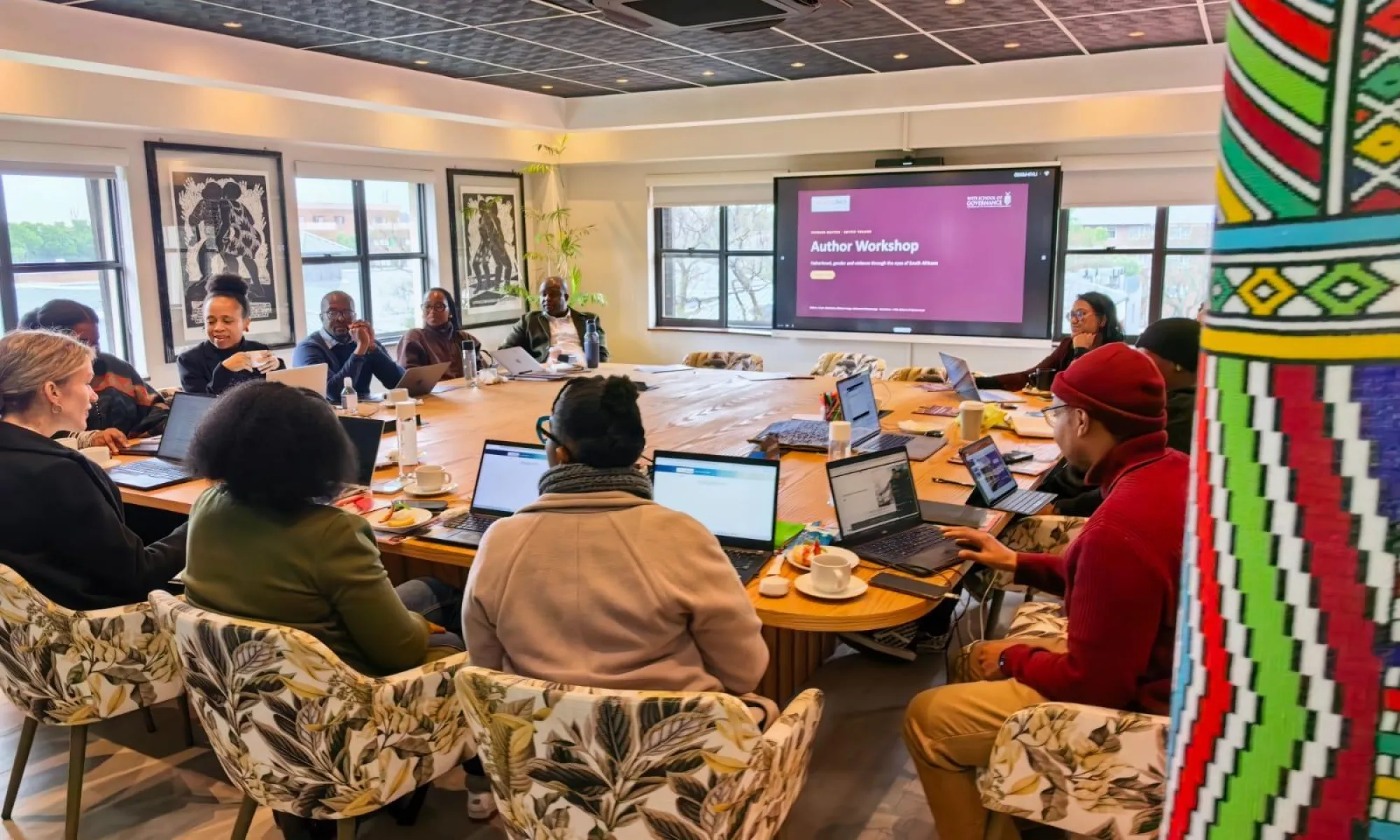
Heartlines hosts author workshop for fatherhood research publication
Head of Research at Heartlines, Livhuwani Maphorogo, convened a workshop for authors contributing to an upcoming Heartlines publication on interdisciplinary perspectives on fatherhood, masculinity and youth in South Africa.
Read more about Heartlines hosts author workshop for fatherhood research publication
Fixlocal has a new home with Jozi My Jozi
We are pleased to share that Fixlocal is moving from Heartlines (the Centre for Values Promotion) to become housed as a project of Jozi My Jozi.
Read more about Fixlocal has a new home with Jozi My Jozi
'I grew up without a father and I turned out fine'
We are very sure about fatherlessness, and that's a problem. Themba Dlamini shares how one radio conversation exposed a national blind spot about faterhood in South Africa.
Read more about 'I grew up without a father and I turned out fine'
The measure of a man is not in his fists
In many communities, the dominant image of manhood remains physical – protect, provide, endure, fight. These instincts are not inherently wrong. But they are incomplete.
Read more about The measure of a man is not in his fists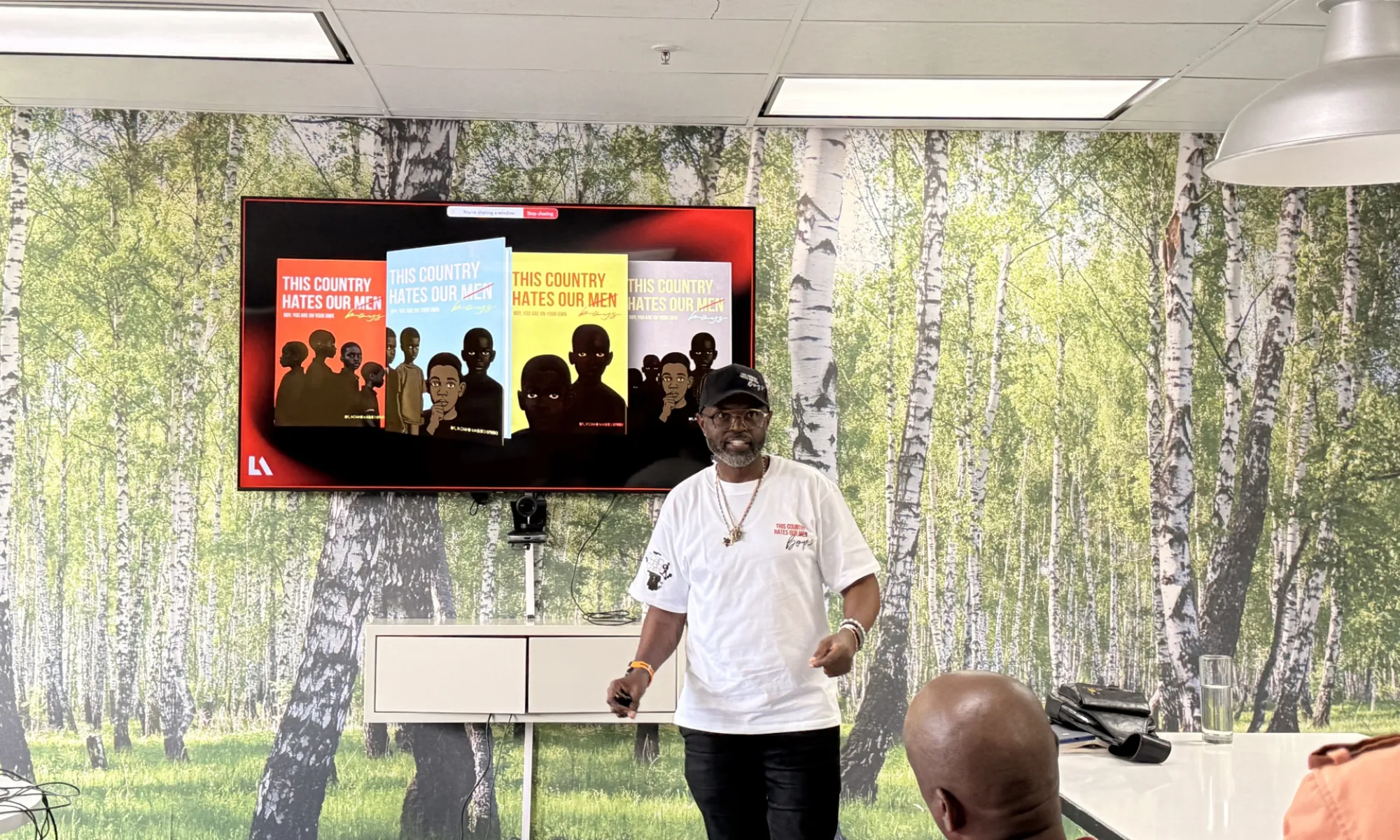
Who will cry for the boy?
Before he was Dr Mzamo Masito, a respected author and advocate for young boys and men, he was just another child trying to survive in the townships of the Western Cape while struggling with his own ‘father wound’. A wound that he would have to confront as he got older.
Read more about Who will cry for the boy?