Who teaches a man how to father?
Being a father , Children , Community , Father Wound , Grandfather vs fatherIn South Africa we apprentice young people into every trade except the one that marks the most lives. A young man can find a college for plumbing, a learnership for banking, articles for accounting – I served mine with ledgers and audit files, under seniors who checked my work and corrected my hand. For fathering, the most consequential work most men will ever do, there is no college, no learnership, no articles. We hand a man a newborn and assume the knowledge arrived with the birth certificate.
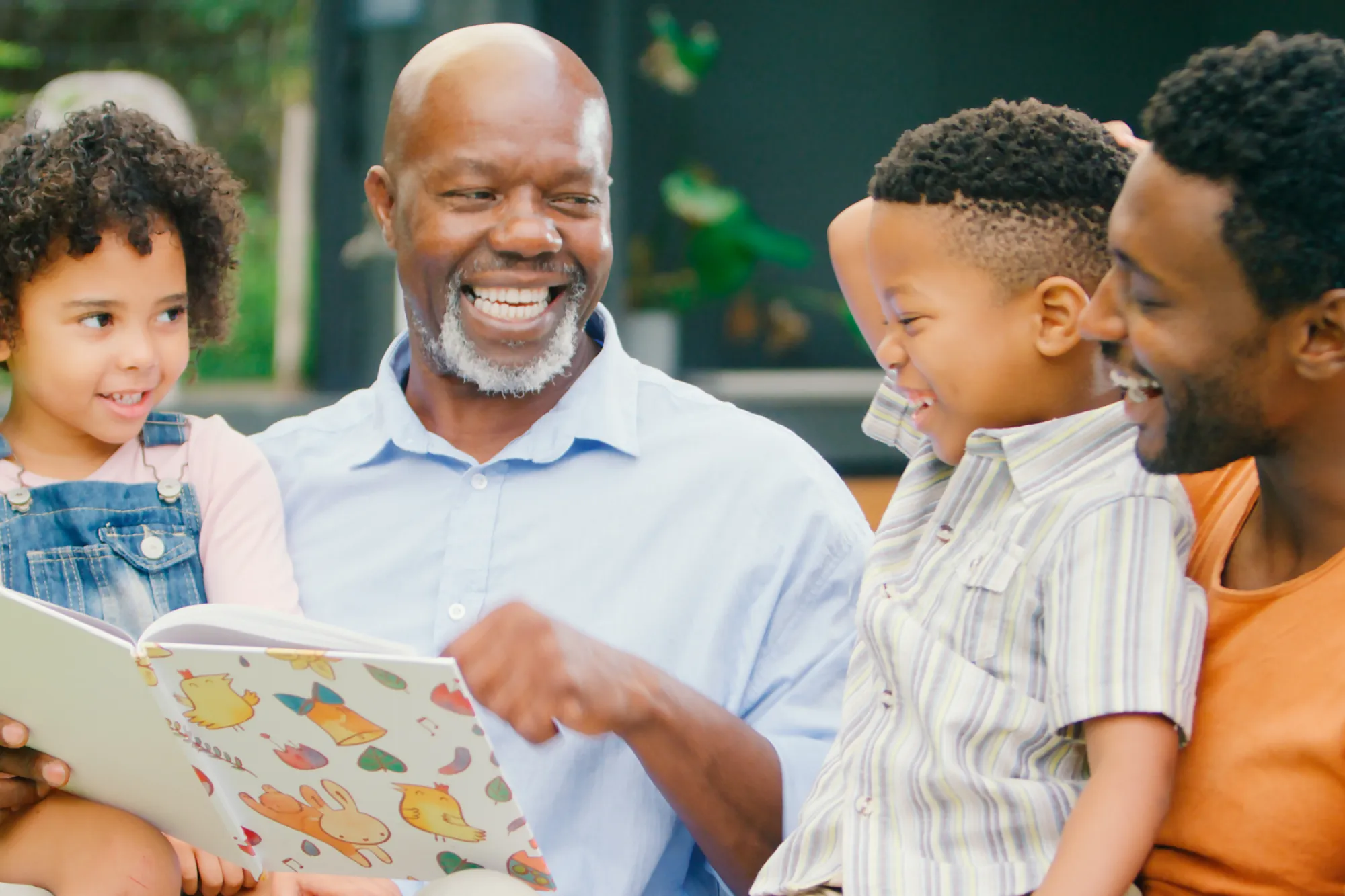
It did not arrive with mine. I grew up in kwaNkabini without a father in the house, raised in large part by my grandmother. When my own children began to arrive, I went looking inside myself for the fathering I would need, and what I found were fragments – pieces gathered from whoever had been standing nearby while I grew.
Some of those fragments were gold. I remember laughing, as a boy at the woodpile, at a drunken neighbour weaving his way home, and my older brother's rebuke landing before the laughter had finished. In one sentence I was taught that a struggling man is still a man, and that mocking him diminishes me. My grandmother taught the same curriculum at her gate: in her homestead no guest was ever a burden, and the only person excused from work was isidalwa seNkosi – one whom the Lord had made unable. I was being taught how to man, one sentence at a time, by whoever happened to be at the woodpile.
And that is the point we keep missing. Boys are always being taught. The village taught us constantly: endurance, respect, how to take a beating without flinching, and the oldest lesson of all – village boys don't weep. There was a curriculum; the trouble was the syllabus. It had chapters on toughness and silence, and almost nothing on tenderness. Nobody taught us how to hold a baby. Nobody taught us what to do when a child burns with fever at two in the morning, or how to speak to a daughter so that she grows tall inside, or how to apologise to a son. Those classes were simply never offered – and then, when a grown man fumbles the skills he was never taught, we laugh at him as proof that he does not belong in the work. There are clinics in this country where a father in the immunisation queue is treated as a tourist attraction. The same assumption that locks a man out of the nursery is the one that never taught him to hold a baby in the first place.
What are we giving our boys?
I wrote in an earlier piece that my father was somebody's unfathered boy before he was my absent father. Follow that thread back and you find a chain: unfathered boys become untaught men, untaught men become absent or fumbling fathers, and their sons inherit the empty classroom. All the while, the country keeps marking the exams of men who were never given the lesson, and calling the results a crisis of character.
Let me be fair in both directions. Not every absent father was untaught. Some men know exactly what their children need and choose not to give it, and no missing lesson excuses that. But we should be careful about calling every failure a refusal when some failures began as an absence of instruction. A man remains responsible for what he does with what he was given. The country must also ask what it gave him.
Learning from older men
Here is the good news, and I stake my own house on it: fathering is learnable. It's learned the way every craft is learned – by apprenticeship. Watching. Copying. Asking. Failing next to someone who has failed before you and kept going. Scripture has always known this. Paul calls Timothy "my true son in the faith" – a fatherhood built not on biology but on apprenticeship. Elisha learned by walking behind Elijah. And in Titus, the older generation is called to model the kind of life the younger generation must learn to live. The Bible's answer to the empty classroom is not a textbook; it is an older man with his door open.
I have sat in circles of men where this actually happens, and it is nothing like a lecture. A man says, "My daughter has stopped speaking to me," and three fathers answer him from their scars, not their theories. A new father asks about a crying baby and five men who once stood helpless at 2 AM tell him what they wish someone had told them. Nobody graduates. Everybody learns. That is the trade school for fatherhood, and any group of men willing to tell each other the truth can open one – in a church hall, a locker room, a WhatsApp group, under a tree.
...we should be careful about calling every failure a refusal when some failures began as an absence of instruction.
And sometimes the most patient teacher is the child himself. My four have corrected more of my fathering than any book, because a father who learns to listen discovers that the child in front of him is not the child he remembers being.
My own fathering was assembled exactly this way: borrowed, begged, copied, prayed for. I am raising four children on a curriculum I had to gather as an adult, from men who let me watch them up close, and from the Father who, Scripture says, trains those He loves. The men who taught me did not sit me down for lessons. They let me stand near them while they lived.
So, who teaches a man how to father? The honest answer is wider than the one I set out to give. My grandmother formed the human being. My brother taught me manhood one sentence at a time. And other fathers – men who let me stand close while they lived – taught me the particular craft of raising my own children. A boy is built by whoever loves him deliberately, women included, and often women first. But when a man reaches for the specific skills of fathering, he still needs at least one father with his door open – and where the biological one is missing, any man willing to open his life qualifies. Who teaches a boy how to man? Whoever is standing at the woodpile when the lesson happens.
Somewhere near you, today, there is a boy at a woodpile, learning how to man from whoever happens to be there. Stand there.

Themba Dlamini
Themba Dlamini is a husband, father of four, pastor and chartered accountant who loves South Africa – warts and all. He is the author of Village Boy: A Memoir of Fatherlessness, and writes to wrestle with hard truths, stir hope and help build a country in which his children can thrive.
Featured
Equipping coaches to tackle fatherlessnes
Read more about Equipping coaches to tackle fatherlessnesYou may also like
Heartlines hosts author workshop for fatherhood research publication
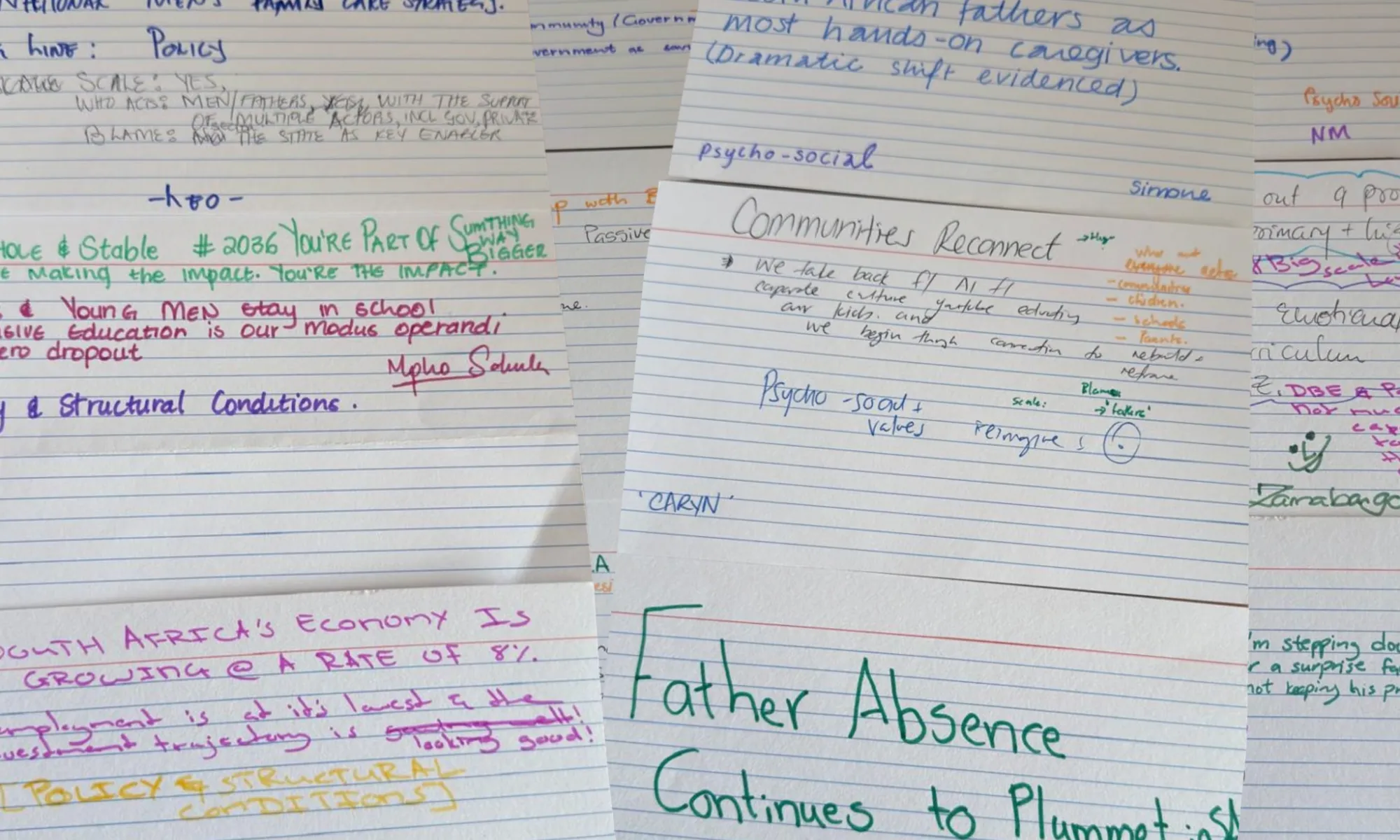
Head of Research at Heartlines, Livhuwani Maphorogo, convened a workshop for authors contributing to an upcoming Heartlines publication on interdisciplinary perspectives on fatherhood, masculinity and youth in South Africa.
Read more about Heartlines hosts author workshop for fatherhood research publication
Fathering my father
Themba has carried the strange inheritance of needing to father his father, and has come to believe that it means three different things. Read his powerful reflections.
Read more about Fathering my father
My lesson in true leadership
When one of his social fathers invited Lehlohonolo to a leadership moment, things didn't turn out quite as he'd expected. But he learnt a life-changing lesson that he still relies on today.
Read more about My lesson in true leadership
What going to the mountains can teach our boys about becoming men
Initiation Series: Part 2
This second article in our initiation series looks at what boys can learn about becoming men who lead well from their time at initiation school.
Read more about What going to the mountains can teach our boys about becoming men
Where are the safe spaces that teach men how to father?
Fatherhood can sometimes feel quite lonely, because no one tells you how to father. When a woman gives birth her village automatically takes arm and offers support, advice, meal plans and encouragement. But as a new dad you can find yourself navigating this journey largely on your own.
Read more about Where are the safe spaces that teach men how to father?