Heartlines hosts author workshop for fatherhood research publication
Children , Youth Message , EducationIf you could write a headline from the future that reflects something about where South Africa will be in 10 years’ time, what would that headline be? This was the question that Dr Caryn Abrahams, Research Director at the Wits School of Governance and Research Advisor at Heartlines, posed at the start of an author workshop hosted by Heartlines.
The workshop was convened by Head of Research at Heartlines, Livhuwani Maphorogo, for authors contributing to an upcoming Heartlines publication on interdisciplinary perspectives on fatherhood, masculinity and youth in South Africa.
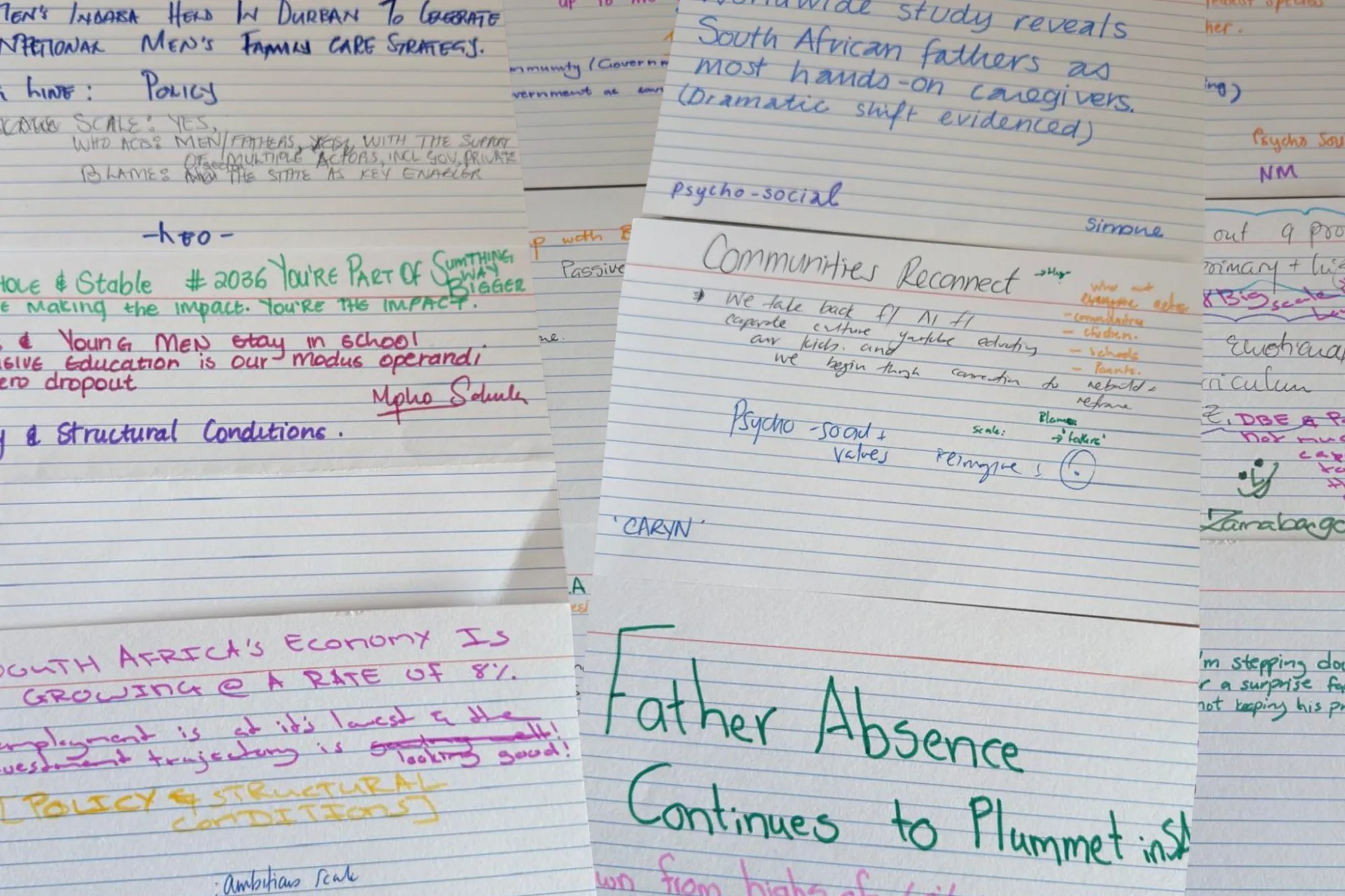
The imagined headlines were overwhelmingly positive. Some were reports of economic growth, while others spoke to increased literacy rates, youth activism, government accountability and systemic change.
Caryn said that usually when she takes people through the exercise, the majority of the imagined headlines are negative, so it was encouraging to see the optimistic views shared by those in the room. And the sense of hope is reflected in the work that they do. Livhuwani agreed, saying, “There was a real sense of curiosity and intellectual energy in the room. Most of all, there was a great deal of passion for the subject and for the possibilities of this work. That gives us confidence that we have chosen the right thinkers to go on this journey with us.”
The researchers care deeply about lived realities in South Africa and are all working in their respective spheres to show how our decisions, history, policies and ways of being affect men, women, communities and, especially, children.
Expanding the body of knowledge on fatherhood
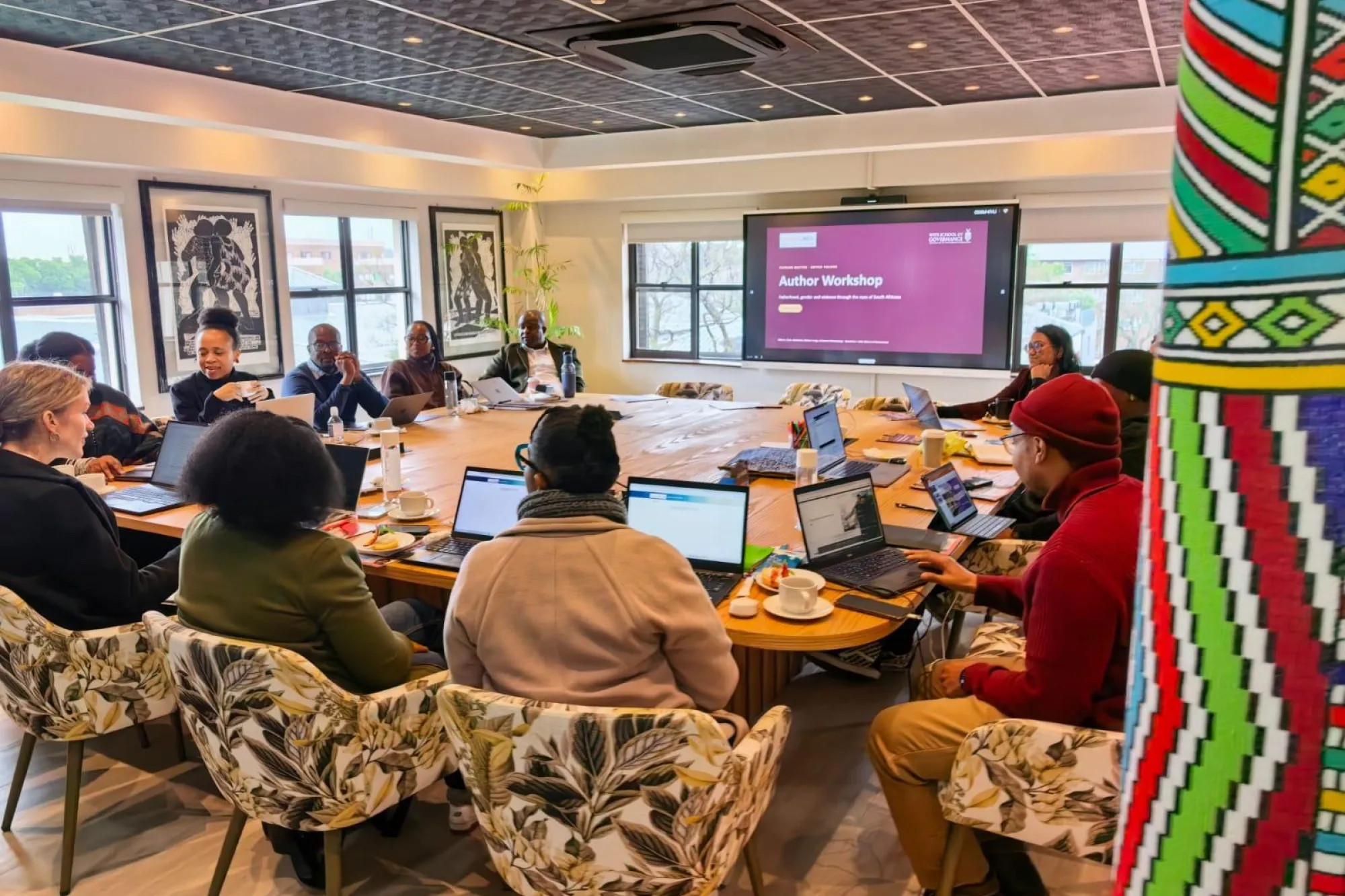
The contributors to the publication will use the raw data from Heartlines’ two formative research reports (which you can see here and here) to develop their chapters and engage with the datasets from their own disciplinary perspectives, producing original scholarly analyses that collectively illuminate what South African children are telling us, and what we, as scholars, policymakers and practitioners, are obligated to hear.
Livhuwani said, “We hope that it can expand and strengthen the body of knowledge on fatherhood in the South African context. We are wanting to give our participants, especially children, a stronger, authoritative voice in the conversation of fatherhood, gender roles and identity, GBV and masculinities, because children have communicated what is important to them.”
The papers will include input from disciplines such as social work, education, law, psychology, social policy, gender studies and development studies. “In order to do justice to the conversations in our research, we have to bring different academic, practitioner and policy voices to the conversation, with the understanding that fatherhood is a complex issue that needs the full attention of different disciplines and perspectives, and furthermore, connect these disciplines and perspectives to help surface questions and ways of thinking that advance the state of fatherhood in this country,” said Livhuwani.
The volume is under consideration with HSRC Press and is anticipated for publication in late 2027.

Lindsey Moyo
Lindsey has a background in journalism, online content production and publishing. She is passionate about helping people use words to communicate their stories and perspectives.
Featured
We want men to have a positive impact in children's lives
Read more about We want men to have a positive impact in children's livesYou may also like

My lesson in true leadership
When one of his social fathers invited Lehlohonolo to a leadership moment, things didn't turn out quite as he'd expected. But he learnt a life-changing lesson that he still relies on today.
Read more about My lesson in true leadership
My father's love language
As we think about our father stories, it can help to remember that fathers are people, just like us. And sometimes, connection grows from understanding how they give and receive love.
Read more about My father's love language
See the winning competition entries
See some of the winning entries from our Youth Month Competition. The competition was an opportunity for children to share their views about fatherhood. There were some powerful, inspiring and moving submissions.
Read more about See the winning competition entries
The price children pay for migrant labour
Long before we had the social discussion about father absence, South Africa had already built systems that made it normal. Men left home not because they didn’t care, but because they had to.
Read more about The price children pay for migrant labour
Education doesn’t fail at school first
At the 2026 Department of Basic Education Sector Lekgotla, Fathers Matter had a chance to highlight children's perspectives on fatherhood – and how their father experiences can influence their education.
Read more about Education doesn’t fail at school first