What going to the mountains can teach our boys about becoming men
Initiation , Community , Social fathers , Women , Youth , IdentityThabo is a husband, father of three, pastor, broadcaster and businessman. But before the microphone, the pulpit and the responsibilities of adulthood, he was a boy in Zwide, in the Eastern Cape, who mostly wanted to play, often getting into the kind of mischief that makes childhood memorable and mothers stressed.

He remembers jumping fences, getting caught and coming home with ashy ankles after swimming where he had been told not to go. Simply doing what boys did at that time.
Before we ask what kind of men boys will become, we should remember that they first need to be boys learning how to listen, adapt, take responsibility and understand that their actions affect other people.
For Thabo, one of the significant chapters in that journey was initiation school.
He describes entering a Basotho initiation space after growing up in a predominantly Xhosa community, without fully understanding the language or knowing what awaited him.
It was frightening and unfamiliar. And, in his words, it taught him bravery and survival.
A lesson in leadership
But perhaps it gave him something else too.
He had to learn to observe before he understood. He had to adapt before he felt comfortable and to face the future without being sure of how things would unfold.
Years later, those qualities would make sense beyond the initiation journey and help build him into not just a man, but a leader.
Leadership, after all, often requires the same things.
You enter unfamiliar spaces, you listen before you speak and you learn how to read people. You make decisions without always having all the answers, and you need courage to face situations you would rather avoid.
What does it mean to be a man?
Thabo once thought being a man meant having things go your way, being the ruler and having everyone bow down to you. But life has a way of changing our perspectives.
Bible college introduced him to the idea of servant leadership, which he would need to practise in his marriage and in his parenting.
A father has to make decisions for people who will live with the consequences long after he has gone.
The courage and adaptability he had begun developing earlier had to grow into something deeper…responsibility.
Leadership, Thabo learned, is not about being served, it's about serving.
This sounds simple until you actually have people depending on you. A father has to make decisions for people who will live with the consequences long after he has gone. And that changes things.
Fatherhood taught Thabo that life would not always be about how he felt or how he wanted things done. Sometimes he had to adjust. Sometimes he had to move beyond his own selfishness because somebody else needed something from him.
Lessons for fatherhood
That ability to adjust had followed him through different stages of his life. But fatherhood gave it a greater purpose; it was no longer about just adjusting to survive, but rather adjusting to serve.
That is where leadership stops being a position and becomes responsibility.
Perhaps that's one of the biggest differences between the leader's eyes and the boy's eyes.
The boy sees the position while the leader sees the responsibility.
The boy asks, “Who is going to listen to me?”
The leader asks, “Who needs me to listen to them?” … big difference.
The lion and the lamb
Thabo describes this as a balance between the lion and the lamb.
The lion knows when to make the difficult decision, but the lamb reminds the lion that strength without humility can become something ugly.
He describes meekness not as weakness, but as strength under control.
There is a clear distinction, especially for young men growing up in a world that can still confuse masculinity with dominance.
We teach boys to be strong, but do we teach them what their strength is for?
Sure, bravery can help a young man face difficulty and discipline can help him endure it.
But leadership asks a bigger question: What will you do with your strength?
The value of role models
Thabo believes the physical strength men possess should be used in service of others, not against them.
Leadership expressed through gentleness, humility and love.
That may be one of the most important things boys can learn from the men around them.
They need to see a man who can lead a room and still come home humble enough to serve his family.
After the radio show, there is no microphone awaiting Thabo at home, no audience, no applause. There is simply family. The people who know the man behind the voice and who can humble you with one sentence, one look or one reminder about the thing you promised you would fix last Saturday.
And perhaps that is another measure of leadership.
Not how people respond when you walk into a room, but who you become when nobody is watching.
Thabo's final lesson for young men is responsibility – owning their mistakes and learning from them. One day, boys will become men that someone will look to for direction. His hope is that they will understand that being a leader is really about seeing others.
This article is part of a series. You can read the first article here.

Lehlohonolo Ramosolo
Lehlohonolo is a creative and results-driven social media and content specialist who is passionate about social and community-building communication.
Featured
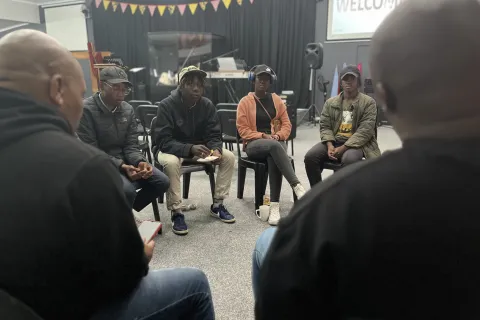
Listening to the next generation in Gqeberha
Read more about Listening to the next generation in GqeberhaYou may also like
Who teaches a man how to father?
Here is the good news: fathering is learnable. It's learned the way every craft is learned – by apprenticeship. Watching. Copying. Asking. Failing next to someone who has failed before you and kept going.
Read more about Who teaches a man how to father?
Fathering my father
Themba has carried the strange inheritance of needing to father his father, and has come to believe that it means three different things. Read his powerful reflections.
Read more about Fathering my father
My lesson in true leadership
When one of his social fathers invited Lehlohonolo to a leadership moment, things didn't turn out quite as he'd expected. But he learnt a life-changing lesson that he still relies on today.
Read more about My lesson in true leadership
Where are the safe spaces that teach men how to father?
Fatherhood can sometimes feel quite lonely, because no one tells you how to father. When a woman gives birth her village automatically takes arm and offers support, advice, meal plans and encouragement. But as a new dad you can find yourself navigating this journey largely on your own.
Read more about Where are the safe spaces that teach men how to father?
When your son goes to the mountain: Why single mothers need support too
Initiation Series: Part 1
This first article in our initiation series looks at the experiences of single mothers as their sons take an important step in their journey to adulthood.
Read more about When your son goes to the mountain: Why single mothers need support too