Humility and the dignity of women
Bridge , Church , Community , WrittenHumility is often understood as a foundational virtue, bringing us to living in right relationships with God, with one another and within ourselves. It is the opposite of pride and greed. However, in light of August’s important celebration of women, we wanted to add one further reflection.
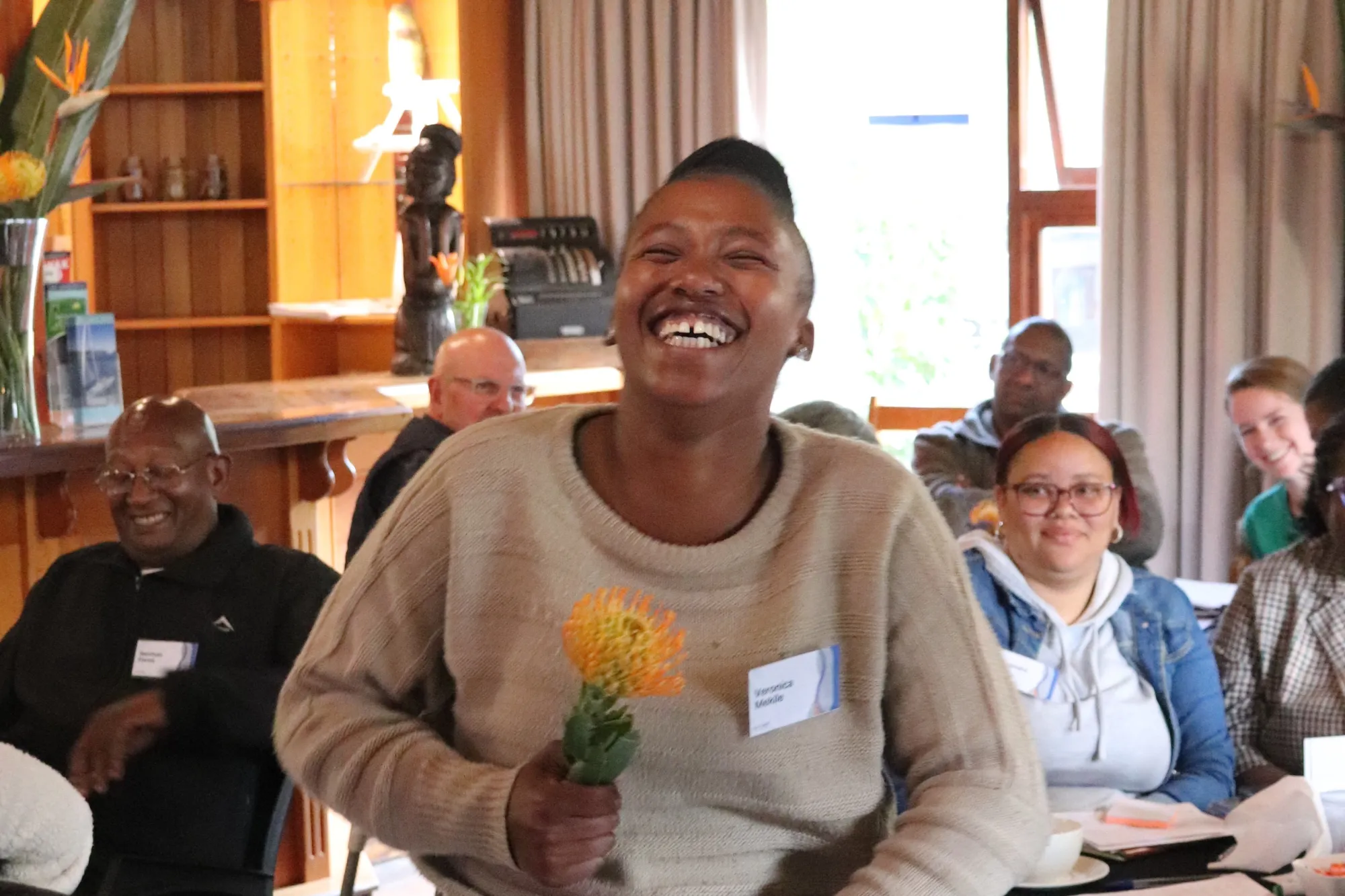
Whether chosen or not, women have often been expected to take the "lesser" role – in the home, in society, and in places of work. Women have so often worked behind the scenes, carrying responsibilities that receive little thanks and sometimes go entirely unnoticed.
Yet Christianity gives us a remarkable picture of what it means to be considered "lowly". The Lord of all – the God who flung the stars into space, who numbers the hairs on every head, and who "owns the cattle on a thousand hills" – is also the God who humbled himself and took the form of a servant (Philippians 2).
In Jesus Christ, we see that the almighty God identifies with and lifts up those whom society has brought low (Luke 1:52). Indeed, the glory of God is revealed through one of the most vulnerable expressions of humanity imaginable: a baby, born into humble circumstances to parents who would soon be displaced, forced to flee their home.
God's power is not diminished by this lowly status. Rather, it is through Christ's humility that we come to know something profound about the very character of God. We discover that intrinsic worth has nothing to do with wealth, status, worldly power or social positions. God's incarnation speaks dignity and honour over every person whom society has considered "lesser".
We see this particularly clearly in Jesus' relationships with women. In a society in which women could so easily be diminished or overlooked, Jesus sees them, listens to them, teaches them, defends them and entrusts himself to them. Women are among those who remain close to him in his darkest hour. And after the resurrection, it is to women that the risen Christ first appears, entrusting them with the sacred task of proclaiming and preaching the good news that he is alive.
In this way, the story of Jesus challenges us to reconsider what we mean by humility. Christian humility is rooted in knowing that our worth comes from God, and in following the God who freely chooses the way of loving service and humility.
God honours those whom the world overlooks, and in Christ we discover that humility itself is not a mark of lesser worth, but a reflection of the character of God.
I lived for several years in the city of Oxford, where I came across the writings of one of my favourite female theologians, Dorothy L. Sayers. Reflecting on the remarkable way in which Jesus related to women, she put it this way:
“Perhaps it is no wonder that the women were first at the Cradle and last at the Cross. They had never known a man like this Man – there never has been such another.” – Dorothy L. Sayers, Are Women Human?
Sayers goes on to describe Jesus as one who neither patronised nor belittled women, but took their questions, arguments and humanity, their whole selves seriously.
As you reflect on the habit of humility, perhaps consider how God has come close to women in the South African context today. How is he revealing himself in and through them to a broken world? How does he long to continue to refine our view or women, or our view of ourselves as women?
And how can the habit of humility enable us to stand against violence, GBV and abuse, and work to restore the God-given dignity of women?

Lara Buchanan
Lara is a Facilitator and Content Design Manager at Rose Castle Foundation, a partner organisation in our Bridging Communities, Building Futures (BCBF) programme and Faith-Formed Reconcilers in George.
Featured

They called me the little bastard
Read more about They called me the little bastardYou may also like

Building stronger youth ministries using story-sharing
On 28 and 29 March 2025, youth leaders from across Durban gathered at the Vuleka Centre in Outer West Durban for a Heartlines Bridge event to help them have courageous conversations about what they can do to strengthen their communities.
Read more about Building stronger youth ministries using story-sharing
Making church a safe space for young people
At the Apostolic Faith Mission of South Africa’s Forum empowerment breakaway regional leaders had the chance to learn how they can create safe spaces for young people in their churches.
Read more about Making church a safe space for young people
I am not my work
Telamsile had to learn how to be herself and hold true to her values as part of a demanding career in an intense industry that doesn't always see the damage it can do in society.
Read more about I am not my work
Building bridges in Tshwane
The Tshwane bridge hosted by Heartlines at the Meulstroom Conference Centre and Bush Lodge was a chance for delegates, church leaders and members of local government to come together, speak about and forge a way forward for issues affecting their community.
Read more about Building bridges in Tshwane
Effective community mediation begins with empathy
Nobody wins during community unrest. At our recent peace-building Bridge event with clerics in the KZN region, the sentiment was clear: we cannot stand by idly and let division and unrest unfold. We need more community mediators.
Read more about Effective community mediation begins with empathy